
The Ontario Combinatorics Workshop (OCW) is a conference where researchers working in combinatorics gather to share their research interests and exchange ideas. This workshop aims at providing a friendly environment for graduate students to give conference presentations, learn about different topics in combinatorics, and meet combinatorialists from Ontario and surrounding areas. The workshop consists of three one-hour invited talks, and several sessions of 20-minute contributed talks.
Plenary Speakers
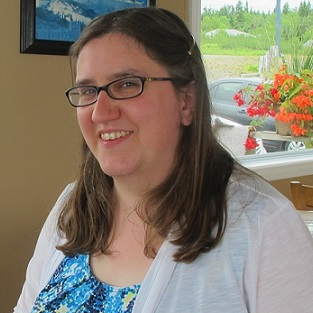
Dr. Andrea Burgess
University of New Brunswick
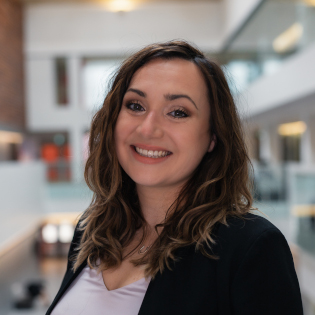
Dr. Erin Meger
Queen’s University
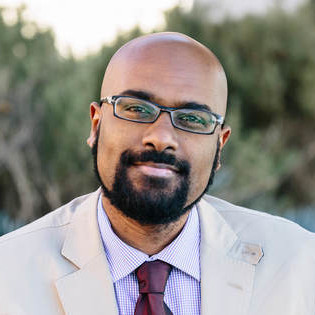
Dr. Mohamed Omar
York University
Registration
You can complete the registration form if you would like to attend. There is no registration fee, but we would like to have an estimate of the participants.
We have limited funding for graduate students who wish to give a talk at OCW. Please complete the application form.
Important Deadlines
- Registration: May 8th, 2026
Contributed Talks: April 24th, 2026| Decision letters have been mailedGraduate Student Funding Application: April 24th, 2026
Events Beyond Talks
- Conference Dinner: All participants and guests are welcome!
- Problem Session: This interactive session invites participants to present open problems, problems with partial progress, questions arising from recent work, or intriguing examples that may lead to further investigation.
WiFi
Eduroam is available across campus. There is an additional WiFi if needed:
- Location: Walter Light Hall
- Network:
CAS-wifi - Password:
QSCcommons2025!
- Location: Goodwin Hall & Computing Commons
- Network:
Commons - Password:
QSCcommons2021!
Peter Rodney Book Prize
The best talk given by a student at the Ontario Combinatorics Workshop will be awarded the Peter Rodney Memorial Book Prize. This prize of a book and memorial book plate is given in honour of Dr. Peter Rodney (1965-1995).
Dr. Rodney graduated from McGill University, and then obtained his Masters and Ph.D degrees in Combinatorics, from the University of Toronto. He graduated in 1993 and went on to do postdoctoral research at the University of Vermont. He then continued to work in both the public and private sectors, using discrete mathematics, cryptography, and number theory.
Dr. Rodney had a deep appreciation for probability theory and was an avid card player. He died unexpectedly at the age of 30. His friends and family created a fund in his memory whose proceeds finance this book prize.